
Naadam used to be a good brand. Sustainable, ethical, inspiring …
But something happened that changed all of that. This is that story.
Where They Were—Naadam Sustainability Rating 2023
In 2023, Naadam held a spot on our Certified list of sustainable brands, earning a total score of 56 out of 100. At the time, the brand was celebrated for its use of responsibly sourced cashmere and storytelling that emphasized transparency and impact in Mongolia, where much of its wool was sourced.
Here’s how Naadam scored across our key impact areas in 2023:
- Transparency Score: 7/14
- Fair Labor Score: 14/33
- Sustainably Made Score: 34/45
- Leadership & DEI: 1/8
- Overall Score: 56/100
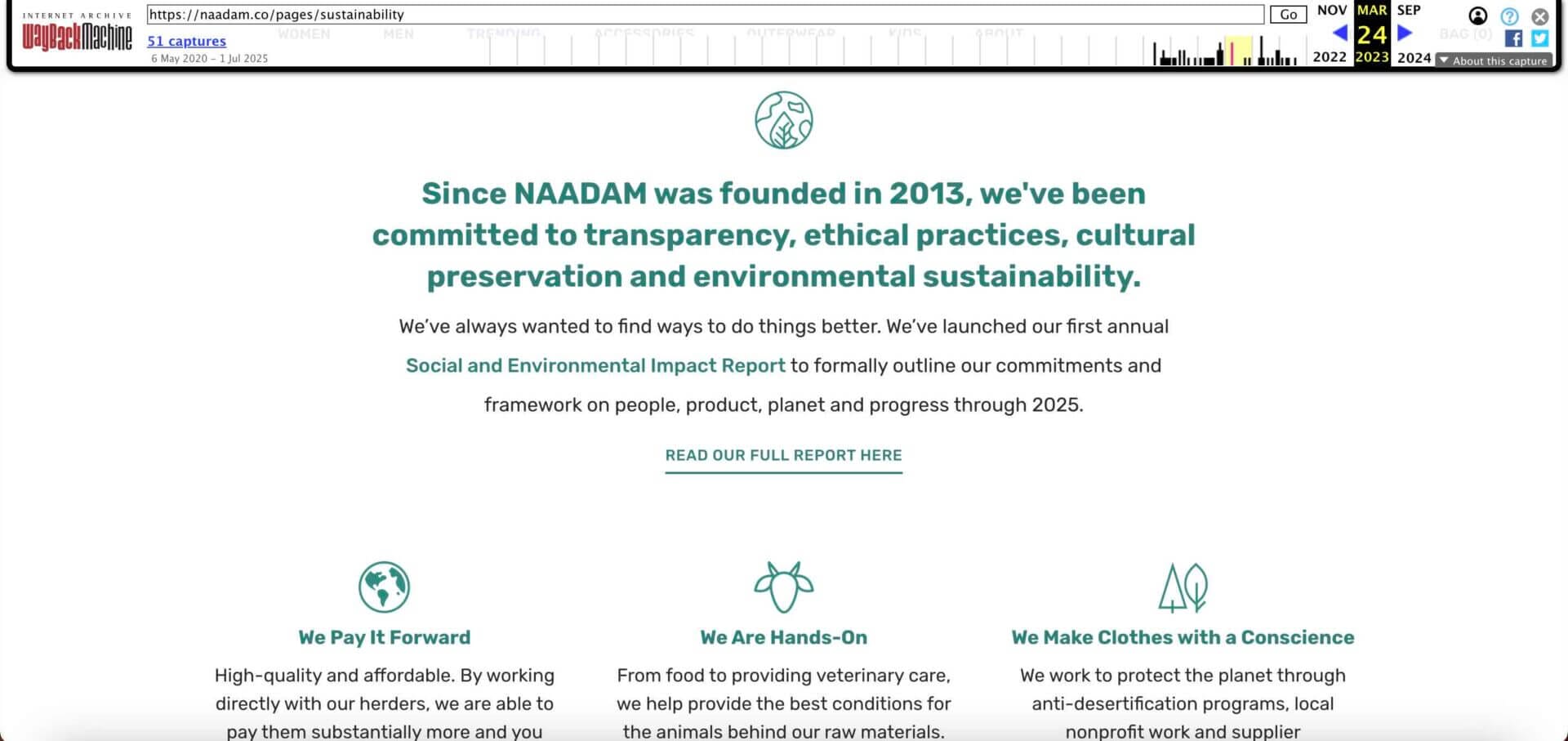
Their highest marks came from the environmental pillar, largely due to initiatives like livestock insurance programs for herders and commitments around cashmere traceability. Additionally, in 2023, Naadam’s sustainability page was more robust—featuring a dedicated impact report, goals for 2025, and a progress report that outlined steps they were taking toward greater sustainability.
While the brand had room to grow in worker well-being and transparency, its overall score reflected a company making meaningful efforts and striving to do better.
But in 2025, things look very different.
Where They Are Now—Naadam Sustainability Rating 2025
In 2025, Naadam’s score dropped dramatically—from a modest 56/100 to a failing 4 out of 100. The shift reflects a stark decline in both transparency and performance across all sustainability pillars. After re-evaluating the brand two years later, we found significant gaps, reversals, and omissions in key areas.
Here’s how Naadam scored in 2025:
- Transparency Score: 2/14
- Fair Labor Score: 4/33
- Sustainably Made Score: 8/49
- DEI (Diversity, Equity & Inclusion) Score: 0/4
- Principles Penalty: –10 (for failing to uphold minimum standards)
- Overall Score: 4/100
Unlike in 2023, Naadam’s current sustainability page lacks depth. The previously available impact report, 2025 goals, and progress tracking are gone. Most notably, there’s no factory list, no living wage disclosure, no evidence of environmental targets, and no updated insights on worker well-being. The shift from a semi-transparent, sustainability-minded brand to one with limited accountability and vague claims resulted in their rating falling to the lowest tier.

This begs the question: What happened to Naadam?
Is Naadam Ethical? How Naadam Went from Certified to Failing
So, what changed? Was it Naadam—or our criteria?
The short answer: Naadam.
Between 2023 and 2025, Eco-Stylist strengthened our sustainable brand criteria to reflect rising standards across the industry. We also added 3 principles, which penalize brands for being fast fashion, for being brands that we don’t trust, or for failing to inspire us that they’re moving towards a more sustainable future—none of which are optional for a brand seeking to be called sustainable today.
But let’s be clear: Naadam didn’t fail because the bar moved higher—they failed because they backtracked.
Even under our 2023 criteria, their current performance would not pass. It would be 14/100.
What once looked like a brand working toward sustainability now appears more like a brand abandoning the commitments that earned consumer trust.
How Sustainable is Naadam? What really happened:
- Transparency declined. In 2023, Naadam had a well–structured sustainability page that included supplier stories, a published Impact Report, and disclosed goals and progress toward 2025 targets, along with third-party certifications like GOTS, OEKO-TEX, and the Responsible Wool Standard. Today, that content is gone.
- Labor conditions are unclear. In 2023, Naadam detailed investments in herder communities and worker benefits—such as livestock insurance and veterinary care. In 2025, there’s no information on living wage commitments, worker well‑being programs, grievance mechanisms, or factory audit results.
- Environmental leadership is missing. While the impact report highlighted sustainability initiatives in herder livelihoods and material standards, the current site doesn’t disclose carbon emissions data, reduction targets, water usage, or progress toward sustainable materials goals. Environmental claims now appear broad and unsupported.
- They lost our trust—and the minimum accountability points. Our updated structure includes a –10 point penalty for brands that can’t be trusted. Naadam triggered this deduction due to backtracking on previous transparency, deleting key sustainability content, and failing to provide essential disclosures.
The result is a stark one: Naadam didn’t just stop improving—they actively erased progress. And that’s why they now sit at the bottom of our sustainability ratings.
Watch our video deep dive to explore how Naadam deprioritized sustainability, what they erased, and what it means for conscious consumers.
Our Sustainable Brand Criteria
At Eco-Stylist, we evaluate brands using a comprehensive framework rooted in transparency, ethics, and environmental responsibility. Our criteria are designed to spotlight brands that don’t just say the right things—but actually do the right things, and share that work openly.
Our rating system covers five core areas:
- Transparency
Does the brand share detailed supplier information, ethical sourcing practices, and third-party certifications? - Fair Labor
Are the people making the clothes paid living wages? Are there protections in place for their health, safety, and rights? - Sustainably Made
Does the brand measure and reduce its environmental impact? Do they use eco-conscious materials and practices? - Diversity, Equity & Inclusion (DEI)
Does the company invest in equitable practices across its hiring, leadership, and community impact? - Principles & Accountability
We introduced this category to hold brands accountable for the basics. Brands that fail to meet these 3 minimum standards—such as fast fashion brands—can lose anywhere from 10 and up to 45 points.
Our methodology is publicly shared through a YouTube video that breaks down every element of our scoring process—so both brands and consumers can understand what it takes to earn a spot on our Certified list. We believe that real sustainability is transparent, and our ratings reflect that belief.
This is Why We Update Our Ratings
Sustainable fashion is always evolving—and so are the brands within it. That’s why we revisit our brand ratings regularly, ensuring that every score reflects current practices, not past promises.
When a brand like Naadam earns certification, it’s not a lifetime achievement award. It’s a snapshot of where they are at that moment in time. To maintain trust with conscious consumers, we reassess brands to see if they’re holding up their end of the bargain.
In Naadam’s case, they didn’t.
Since our last evaluation, Naadam has removed key transparency measures, backtracked on their sustainability communication, and failed to offer the evidence required to maintain even a baseline rating. Our job is to make sure our Certified list only features brands doing the real work—not greenwashing, not hiding, not regressing.
When we say a brand is ethical or sustainable, it’s because they’ve earned that label based on facts, not vibes. And if that ever stops being true, we’ll tell you.
3 Ethical Alternatives to Naadam
If you’re looking for brands that prioritize transparency, traceability, and ethical wool or cashmere production, here are three Certified alternatives from our list:
1. ASKET

ASKET offers cashmere and wool sweaters crafted with transparency from farm to finish. Their detailed supply chain disclosures, cost transparency, and commitment to longevity make them a top choice for conscious consumers.
👉 Read ASKET’s full brand rating
2. Patagonia

Known for pioneering sustainability, Patagonia offers knitwear like their Better Sweater® line made from recycled wool and traceable materials. The brand publishes full impact reports, supports regenerative agriculture, and holds itself accountable with measurable environmental goals.
👉 Read Patagonia’s full brand rating
3. Pangaia

Pangaia combines science and sustainability in innovative ways—like their Regenerative Merino Wool Oversized Sweater, made from wool sourced from regenerative farms. The brand is committed to climate-positive action and shares details about material origins and eco-impact throughout its product pages.
👉 Read Pangaia’s full brand rating
Why These Brands Stand Out
- Transparent supply chains and traceable sourcing
- Commitments to fair labor and living wages
- Clean environmental records with measurable targets
- Circularity initiatives and take-back programs
Each brand earns its Certified status not just by offering ethically sourced wool or cashmere—but by proving it through transparency, accountability, and meaningful impact.
Greenwashing is real. But so is accountability.
At Eco-Stylist, we’re committed to telling the truth—even when it’s uncomfortable. Brands don’t get to coast on past promises. If they backtrack, we’ll let you know. If they do the work, we’ll celebrate them.
You deserve fashion that aligns with your values.
Start here: Browse Certified Ethical Brands
Want more honest updates like this?
Scroll down and sign up for our newsletter in the footer of this page to get conscious fashion insights, brand ratings, and style with substance—delivered to your inbox.
Editor’s note: Naadam first passed our assessment in 2021 with 57/100. In 2023, we updated their rating and they earned 56/100, maintaining their certification. In 2025, we updated it again and saw a considerable decline to 4/100.

Garik Himebaugh is the founder of Eco-Stylist, the go-to resource to find ethical clothing. He’s also a sustainable personal stylist and international speaker on all things sustainable fashion. Garik loves coffee, climbing, and clothes.


