

The fashion industry is slowly waking up to the fact that green credentials matter. Style and price are no longer our only considerations as consumers. We want to know that a brand has ethical values. That they pay their makers a living wage and provide safe working conditions. That they make every effort to minimize their impact on the planet.
So how can you tell if a brand means what they say about sustainability or if they’re just really good at PR? We show you how to read between the lines and make your own assessment of a brand’s true ethics. And all in just five minutes.
Consuming less is the number one way to minimise your impact on the planet but there might be times when you need to buy something new. One quick way to make sure your purchase is ethical is to shop with an Eco-Stylist certified brand. Any brand that makes its way onto our list is a leader in terms of ethics and our certification process really puts them through their paces. See the full list of Eco-Stylist certified brands.
Is this brand sustainable? Where to start
We want you to feel empowered to make your own assessment about a brand’s sustainability. Here are our top tips for what to look out for and the key questions to ask.
A brand’s website is the best place to start your research: Most brands have a page dedicated to sustainability, impact or Corporate Social Responsibility. Information on specific products can also tell you a lot about a garment’s environmental impact.
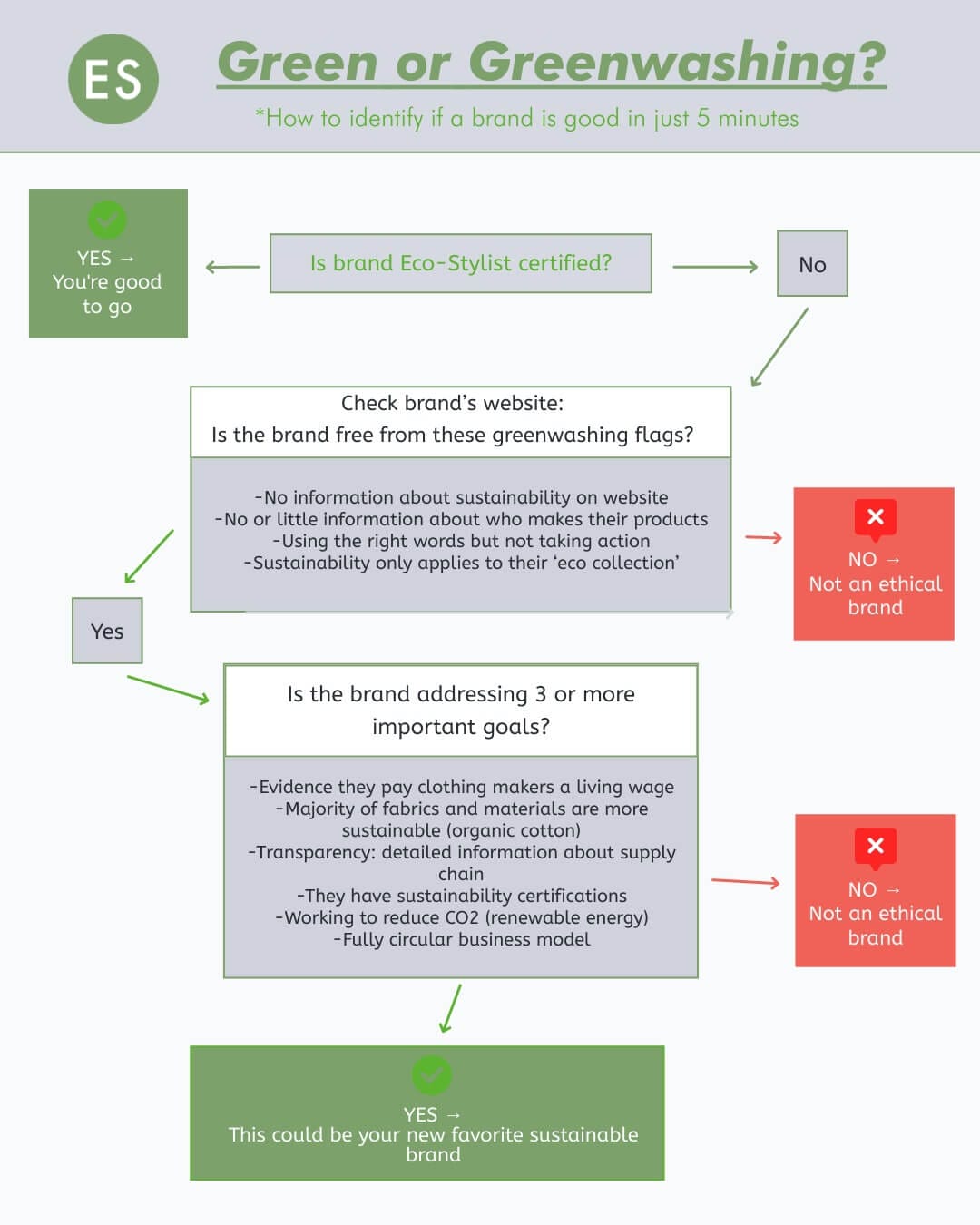
Here’s a snapshot of what to look out for. We created this flowchart for you to use and quickly tell if a brand is good or not.
Read on for more about how to tell the green from the greenwashed.
Step one: Look for greenwashing red flags
If you see any of these red flags on the brand’s website they probably aren’t sustainable and your research can end here. If not, carry on to step two below.
- No information about sustainability on the brand’s website.
- No or little information on the brand’s website about who makes their products.
- Using all the right words but not backing them up with action.
- A focus on environmental initiatives in the US or Europe but not in the countries where products are made.
- Brands that have one ‘eco collection’ but don’t apply the same standards to all products.
Step two: Check for sustainability in action
If no red flags came up in step one, carry on and take a closer look at the brand. Taking positive action in the key areas below shows a brand is serious about their social and environmental impact. Check the brand’s website to see what they’re doing.
Fair labor and working conditions

Top of the list for Eco-Stylist certification is how brands treat the people who make their products. We want to know that everyone along the supply chain is paid fairly and that working conditions are ethical and safe.
If a brand is investing in their employees, they’ll want to shout about it. You’re looking for how transparent the brand is about wages. Do they pay a living wage or higher for the location where their products are made?
You’re also looking for any information about working conditions: Do employees have access to childcare and healthcare? What is the brand doing to invest in communities where their products are made? If a brand has Fairtrade or SA8000 certification that’s a definite plus point but only bigger brands are likely to have these.
Sustainable materials
Check out what materials the brand is using to make their products. Organic, natural materials do less damage to the environment than synthetic ones. Look out for organic cotton, Tencel, hemp and natural dyes. If a brand uses animal-based materials like leather and wool do they include any information about animal welfare in their product information?

Certifications
Checking out a brand’s certifications can be a quick way to assess how committed they are to sustainability. Does the brand use GOTS certified textiles? Are they Fair Trade certified? Take a look at our list of key ethical certifications to learn more.
Transparency
How transparent is the brand about where and how their products are made? Transparency is the first step towards stopping exploitation. How much information does the brand share about its supply chain? Of Eco-Stylist certified brands, 83% share detailed information about where and how their clothes are made.
Environmental impact
This is a biggie. It’s easy for brands to say they care about the environment but what specific measures are they taking to limit their impact? Ideally they will have a strategy to reduce their carbon emissions and they’ll be actively investing in renewable energy. It’s great if brands use only recycled packaging but this alone isn’t enough to make a difference.
Diversity, Equity and Inclusion (DEI)
When we assess a brand for Eco-Stylist certification DEI is a key consideration. We measure sustainability by who we include. We want to see an inclusive, diverse and sustainable fashion industry.
Who are the brand’s decision-makers? What steps is the brand taking to be an anti-racist organization? What are they doing to ensure they’re truly inclusive?

Circularity
It’s popular for brands to have recycling bins in-store but this can be an empty gesture to make you think they care about sustainability. Look out for specific information on what happens to unsold clothes and if there’s a robust strategy for recycling. When it comes to circularity Eco-Stylist certified brands are leading the way: Thousand Fell is one of the few brands that has accomplished a fully circular business model. You can return your worn out shoes and the brand will refurbish them or recycle them into raw materials to make new shoes. Check out our guide to find more about brands acing circularity.
Still not sure how to know if a fashion brand is sustainable?
If you made it this far, congratulations—you’ve already done more due diligence than most shoppers. Evaluating a brand’s ethics isn’t always black and white, and sometimes the answers aren’t easy to find.
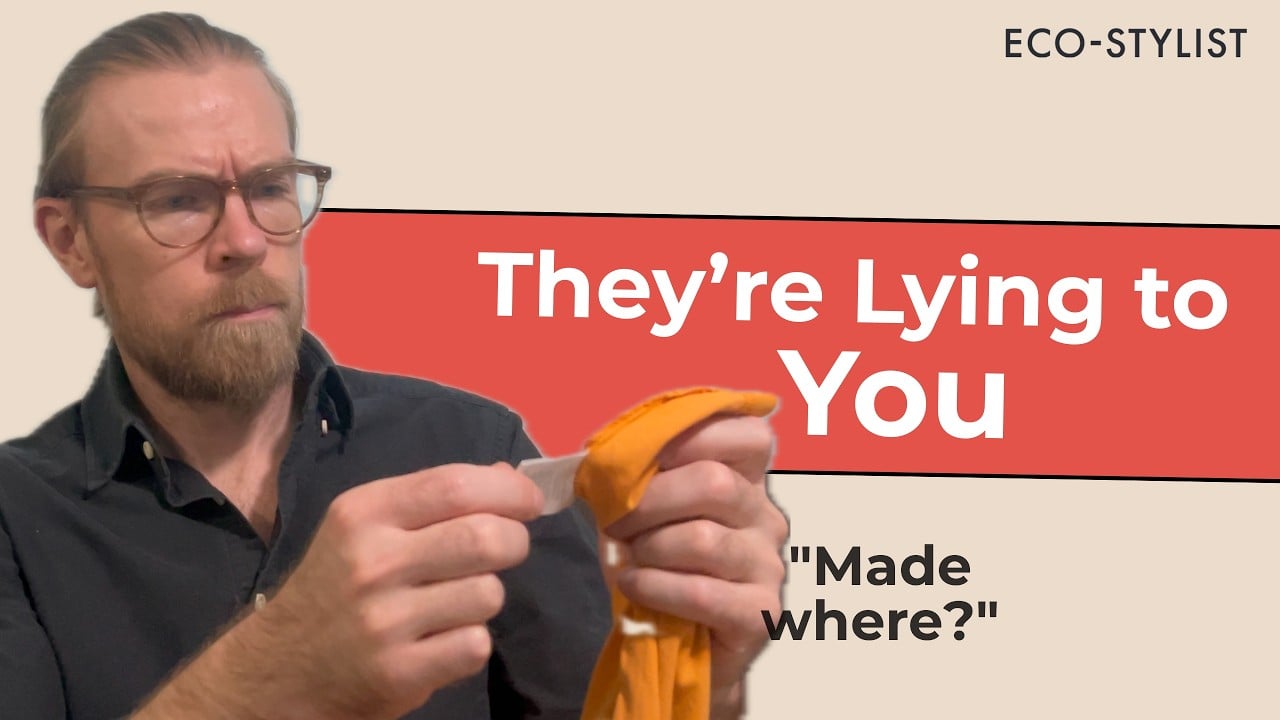
If you want a deeper explanation, watch the video below. We walk through this exact flowchart step by step—with more context, examples, and tips for spotting gray areas and greenwashing.
Watch: How to tell if a fashion brand is truly sustainable (17-minute deep dive)
If you still have questions after going through the steps, drop them in the comments and we’ll do our best to help.
And if you’ve completed the evaluation but remain unsure, you can also submit a brand’s name via our contact form. Our research queue is long, but we’ll add it to the list and get back to you when we can.
Want to know more?
We’ve got more resources to help you!
Check out our in-depth blog post on greenwashing in the fashion industry here: The Cycle of Greenwashing in the Fashion Industry: How Brands Rebrand to Keep You Shopping.
For more tips on ethical shopping take a look at this blog post: 10 Tips for Ethical Shopping: Guide for the Ethical Consumer
Editor’s note (article updated January 14, 2026): We added a video that walks through this same flowchart in greater detail for readers who want a deeper, step-by-step explanation.

Catherine is a content writer based in London. She loves vintage, reading and swimming in the sea.


