

What is Eco Perfectionism?
Eco-perfectionism is the belief that there is one correct way to be sustainable and live an environmentally perfect lifestyle. It emerged alongside the sustainability movement and is still a prevalent issue to this day, particularly with the rise of social media.
Eco-perfectionist thinking is simply not true nor helpful to the sustainability movement and can cause divide within the community. In particular, for the sustainable fashion movement, eco-perfectionism can scare away people who are interested and curious about joining the community.
The expectation of perfectionism can be unattainable for many people and can isolate those who are not in the right circumstances to achieve these high standards.
This is why many environmentalists are against advertising an eco-perfect lifestyle as sustainability looks different for everybody.
The Harmful Effects of Eco Perfectionism
The problem with eco-perfectionism is its negative impact on the sustainability movement. It is potentially one of the biggest barriers to getting people to make more sustainable changes in their life.
Research suggests that eco-perfectionism is linked to less frequency of pro-environmental behaviour, this is due to all-or-nothing thinking. This harmful idea is often portrayed in campaigns, for example “Food waste harms the environment, please protect the environment by not leaving any food on your plate”. This, accompanied by an image of a red cross over a plate with food and a green tick over a plate without food, reinforces the binary idea of good and bad actions.
Although perfectionist behaviour may help in some simple pro-environmental tasks, such as turning lights off when leaving the room. Perfectionist behaviour does not help with more complex behaviours like reducing meat consumption, this is because of the fear that they will not achieve the ‘perfect’ outcome (going vegan).
These binary ideas of good and bad actions can cause fear/frustration which can result in avoidance and ultimately hinder pro-environmental behaviours. Rigid rules are not what should be at the core of the sustainability movement, values should be.
There is often talk of a hierarchy of sustainable practices, some are classed as the most and some the least impactful. However, this thinking is not productive and does not bring the sustainability community together. We need to uplift each other instead of ranking our approaches, so instead of comparison, all efforts should be accepted and encouraged.
Video: Understanding Eco Perfectionism
If you’d like to learn more about eco-perfectionism and its effects on the sustainable fashion community, check out this video.
How to Practice Sustainability Without Perfection
Sustainability should not be a competition or about moral purity, depending on individual circumstances, there are many ways to contribute.

For example, sustainable fashion can come in many forms, thrifting and shopping with sustainable brands are both valid options. However, eco-perfectionistic thinking would say that thrifting is the only option for sustainable fashion.
This strict thinking does not help the sustainability movement. We need to be a united front against fast fashion and accept any efforts to improve sustainability.
To grow the sustainability movement we need more people to participate in pro-environmental behaviours, they don’t have to be ‘perfect’. It is better to have millions doing some pro-environmental behaviours than a handful doing them all perfectly.
Patagonia has recently come under fire for using recycled synthetics because new research has suggested these produce micro-plastics. This does not mean Patagonia should be cancelled, we should simply encourage them to use different materials like organic cotton.

Thrifting, although great, should not be the only option for finding sustainable fashion. It is not a realistic and accessible option for everybody so they should be encouraged, not shamed, to buy from sustainable brands.
There is not one way to be sustainable, everyone has to make choices according to their own circumstances and privileges.
Shaming people and saying what they are doing is wrong is not helpful and discourages people from maintaining pro-environmental behaviours.
Breaking Out of Eco Perfectionism
Encouragement is the key to furthering the sustainability movement, leaving negativity behind. Space for mistakes and growth is important to encourage more participation. Sustainability is for everyone, it is vital not to gate keep it with rigid rules or restrictions.
In fact, perhaps aiming to be imperfect environmentalists is the most impactful way to encourage others to pick up pro-environmentalist behaviours.

Eco-perfectionism can be found all over social media, a lot of it being fake. The rise of these posts and trends on social media may be preventing people from sharing their own sustainable changes, as they may fear they aren’t doing it perfectly.
So be aware of this when navigating social media and try to be truthful when sharing your sustainable practices online.
My Struggle with Eco-Perfectionism
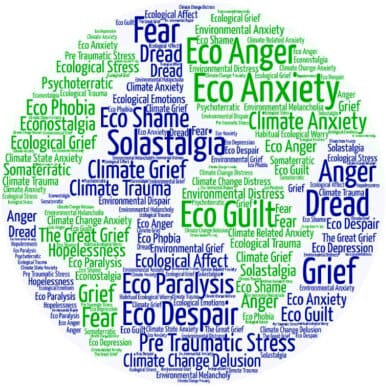
Eco-anxiety is chronic fear and distress regarding the climate crisis, it is characterised by feelings of helplessness and anger. This is linked to eco-perfectionism as if you ‘mess’ up and do not meet the impossibly high standard set, then this might increase feelings of guilt, hopelessness and fear.
During my teenage years I experienced both eco-anxiety and eco-perfectionism and it led to me being burnt out and miserable. I had so much passion for making sustainable changes in my life and at one point was totally determined to live a ‘plastic free’ life. However, this was a struggle for me and I ended up ‘messing up’ many times, and was left feeling guilty so I started to give up on reducing my plastic consumption.

It took time to realise that this was just the harmful eco-perfectionist thinking and that to make a difference I did not have to completely eliminate all plastic from my life but just reduce it when I could. This was a weight off my shoulders and has drastically improved my approach to sustainable living and has led me to encourage others to take part!
Change the World with Eco Imperfectionism
The best way to end the fast fashion industry and the climate crisis is to get lots of people to live sustainably in an imperfect way. After all, to make sustainable fashion the norm we don’t need a few folks doing it perfectly—we need millions doing it imperfectly.
To find some brilliant and accessible sustainable fashion brands to support check out Eco-Stylist’s Brand Guide—and let’s help move the needle to make the fashion industry better.

Maisie is a content writer based in England. She recently graduated from the University of Exeter with her MA. She loves animals, nature and reading.


