

Have you ever found yourself idolising a stranger on your Instagram feed? We scroll past cool, effortlessly styled outfits and feel an immediate desire to become them. Their posts are flooded with likes, compliments, and admiration; they look confident, and their clothes seem to carry that confidence too. However, as we look more closely, a pattern begins to emerge. An endless, almost obscene rotation of outfits appears on our screens: “My winter jacket haul,” “Fall wardrobe trends this year.” Behind the curated confidence and constant praise lies a question worth asking. How much clothing is too much, and what is the real cost of this endless consumption?
This inherent desire for approval from others and to be accepted or seen as cool drives consumer behavior in the fashion industry. It is accelerated by fast fashion-themed social media, and social platforms like Instagram and TikTok amplify the need for external validation through likes, comments, and followers, encouraging users to constantly update their wardrobes to keep up with trends and gain social approval. Individuals, especially young people, feel the pressure more than ever to conform to the latest fashion trends to be accepted or admired by their peers, and to buy something that will make them feel good.
External validation gained from wearing new or trendy clothing often provides only temporary happiness, trapping consumers in a cycle of repeated purchases and fleeting gratification. Fast fashion brands exploit this through advertising and influencer partnerships, creating a sense of urgency and desirability by capitalising on insecurities and the human need to belong. This raises an important question: how do we escape the influence of social media algorithms that constantly shape what we see and what we buy?
Our Addiction to Trends
Social Media already holds us in the palm of its hand and is demonstrating addictive qualities comparable to those of powerful stimulants. Doomscrolling has only exacerbated the addictiveness, along with influencers accelerating fast fashion greenwashing, and apps are now designed to tailor content seamlessly to the individual’s algorithm.
Consuming fast fashion content (like haul videos, influencer posts) fuels the desire and perceived need to buy more fast fashion, creating a cycle driven by trends, FOMO, and instant gratification, leading to overconsumption and increased waste. Vogue reports that the #haul hashtag has 24.4 billion views on TikTok alone, and hashtags like #AmazonFinds (26.1 billion views) and #SheinHaul (6.4 billion views) are widely associated with fast-fashion items. This level of exposure increases the visibility and desirability of frequent buying.
How Do Social Media Algorithms Drive Fast Fashion?
Fashion Hauls are among the most environmentally harmful trends featured on social media; they are also among the most addictive and widely accepted. Let’s explore why.
1. Idolistic Culture
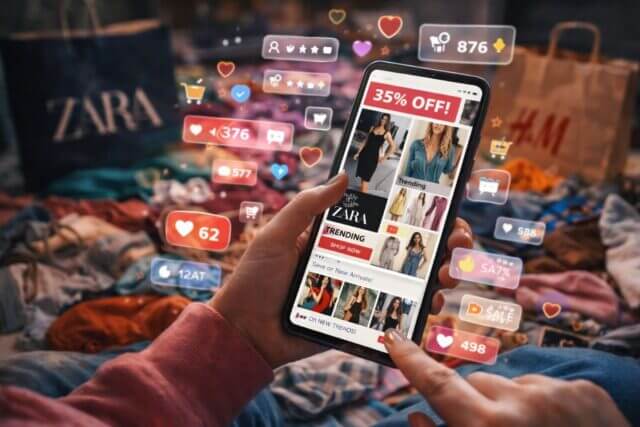
We have grown into an idolistic culture when it comes to the perfect life or style, and this is fuelled by Influencers flaunting their dream lifestyle and aesthetics through products and brands; therefore, our fast fashion feeds are only on the rise through cultural trend cycles. The constant stream of fast fashion content and influencer hauls makes it increasingly difficult for individuals to resist the urge to buy, especially when platforms like TikTok Shop place shopping links right at the bottom of videos for easy access.
Social media influencers play a powerful role in shaping consumer shopping habits. Studies show that the more influencers an individual follows, the more frequently they purchase clothing, as influencer posts featuring new outfits and brand tags prompt consumers to shop more often.
2. Algorithmic Amplification
Instagram employs distinct algorithms across Stories, Reels, and the Feed, as user interaction varies between these features. As a consumer, this means what you view is tailored based on your behavior and interests. Instagram prioritises content based on your interactions with each feature, leading to content you’re more likely to enjoy. This is fantastic news if you are an eco-conscious queen, but devastating for those who have a fashion purchasing addiction.
The app determines what content to show users by analysing signals such as post quality and levels of engagement. As it learns from user interactions, such as liking, saving, or clicking on fashion-related posts, it increasingly promotes similar content and advertisements aligned with those interests. As a result, you’re more likely to see posts from brands, influencer recommendations, and shopping links that match your tastes, making it easier and more tempting to shop directly through the app. The more you engage with shopping-related content, the more the algorithm prioritises similar posts, reinforcing your interest and potentially influencing your fast fashion purchasing habits.
3. Fast Fashion and the Brain
Shopping is now seen as a form of entertainment, with a study by the Urban Land Institute showing that half of men and 70% of women consider shopping a form of entertainment. A study by Stanford, MIT, and Carnegie Mellon found that the more people wanted a clothing item, the more their brain’s pleasure centre was activated, directly linking shopping desire with a neural reward response. Social media can drive the fast fashion cycle by triggering the brain’s dopamine response, which can encourage compulsive shopping, spark social comparison anxiety, and undermine self-esteem.
4 Ways to Do a Fast Fashion Social Media Cleanse
Here’s four actions to detox your social media from the grasp of fast fashion.
Action One: Blocking Your Feed from Specific Phrases
Now you know some fast fashion facts, do you want to block out next black Friday? Or simply make the conscious switch to healthier fashion habits? You can merely use your app settings to block out certain words and phrases to avoid any fast fashion triggers. You can block certain words or phrases from appearing on your feed. We will be using Instagram as our primary example of how to do this.
Step 1: From your profile, go to your Settings and Activity (the 3 bars in the upper right)
Step 2: Search and select: Content Preferences
Step 3: Select Specific words and Phrases.
Step 4: Type in words that are driving fast-fashion promotion. For example: “H&M, Fashion Haul, Zara, BlackFriday, Shein”. Everything you add here, you’ll now see less of.
Step 5: Enjoy the bliss of a less consumer-based feed! You will no longer receive posts with any hashtags or captions featuring these words, and you are slowly making the active choice to change your algorithms.

Action Two: You Can Now Control Your Algorithm
Instagram changed its algorithm settings just this past February to give users more control over what they consume. So really, your fate is in your own hands!
Step 1: Choose a fast-fashion haul on your feed that you no longer want to see.
Step 2: Select the More options icon on the Reel (the three dots in the bottom corner)
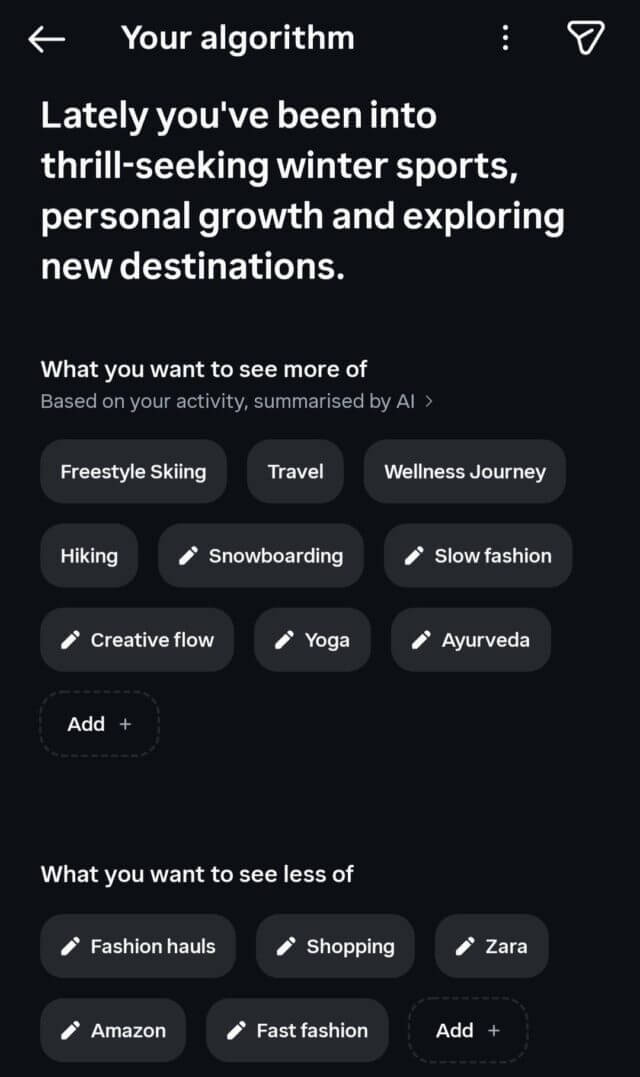
Step 3: choose the “See your algorithm option”
Step 4: Your Instagram will give you a summary of what you have been consuming lately. It will let you choose what you want to promote in your feed vs. what you want to see less of! You simply get to design your feed. For example, you could say “Fashion Hauls” In the ‘What you want to see Less of’ section and “Slow fashion brands” in your “What you want to see more of”.
Step 5: Enjoy your feed, designed by you! And congratulate yourself, you are now thinking like the Eco fashionista you know you are.
Action Three: The Clean Slate
Ready for a completely fresh perspective? You can also go the full monty and reset your suggested content.
Step 1: From your profile, go to your Settings and Activity (the 3 bars in the upper right)
Step 2: Search and select Content Preferences
Step 3: Tap ‘Reset suggested content’ and tap ‘next’
Step 4: Finalise by tapping ‘Reset suggested content’ to confirm.

Action Four: You Are What You Consume
It is now up to you to redesign your feed. By changing what you search for online, you can change who you become: the content you consume shapes your perceptions and interests, and over time can profoundly influence your behaviour and your life.
After Your Social Media Fast Fashion Detox: What Now?
Changing your social media algorithm isn’t just tidying up your feed—it’s reclaiming control over what shapes your thoughts, your choices, and ultimately your life. Social media can be fun and explorative, but if trends like fast fashion are dominating what you see, you have the power to shift the narrative.
Follow our steps to cultivate a feed that reflects your values, guiding you toward a greener, cleaner, and more intentional way of living – without compromising style.
Next Steps
Join our newsletter (just scroll down to the bottom of the page) and explore our guides to help you fight fast fashion:
- How to Stop Fast Fashion
- Fast Fashion Overconsumption is Also Bad for Your Happiness
- Top Fashion Brands Recycling Clothes, You Should Know 2026
Readers Note:
Keep your mental well-being as a priority. While Social media can offer a space for social connection and self-expression, it can also have negative effects on our mental well-being. Stay safe out there and speak to someone you can trust if you need emotional support.

Deanna is a Scotland-based writer who’s passionate about storytelling, creative sustainability solutions, and exploring cultures around the world. She also loves watercolour painting.


