In 2021 the fast fashion industry was worth $91 billion, a price set to double by 2027. The rapid growth of the industry shows little sign of slowing, so just who is reaping the benefits of fast fashion’s economic boom?

Rising wealth inequality has caused many people to point to the existence of billionaires as evidence of systemic failure. Just 10% of Americans own 90% of the country’s wealth: this state of affairs leaves a bad taste in many people’s mouths. Millions of people, labouring for unfairly low wages are the base on which 10% of Americans accumulate wealth, deepening the fiscal inequality of the country.
Fast fashion is rapidly producing more billionaires. If individuals are calling into question the morality of billionaires in any form, then fast-fashion billionaires, a group of people whose fortune is built on an active disregard for the planet and the people in their employment, will certainly face scrutiny.
The net worth of the wealthiest fast fashion billionaire is currently sitting at a booming $150 billion. It would take 125 million years for a minimum wage garment worker in Bangladesh to make this amount of money. This stark wealth gap provides an insight into how the fast fashion industry builds its profits on the back of the inhumane treatment of others.
Why Are There So Many Fast Fashion Industry Billionaires?
Fast fashion is producing an increasing number of billionaires for multiple reasons.
- Production is carried out at rapid speed and incredibly low cost.
- Shoppers are buying increasing numbers of fast-fashion products every year.
These factors have allowed for the tremendous growth in the low-end fashion sector, pumping billions into the market until it has become big enough to rival the worth of the luxury fashion market. Economist Achim Berg writes- analysing the Forbes rich list from the last 20 years- that the growth of both low and high end fashion is ‘squeezing’ the mid market, forcing clothing prices to become either extremely low or extremely high.
The increasing wealth of fast fashion moguls is a direct result of unsustainable practices that disregard the well-being of both the planet and garment workers across the world. Businesses cut costs by using low-quality materials to commission up to 100 million items a day; that’s 40% more than could ever be sold or worn.
By outsourcing garment construction to the global south (such as Bangladesh, India, China, Vietnam, and Indonesia), fast fashion brands are able to pay for maximum labour at minimum cost to produce their clothes. This practice that actively harms workers, the majority of whom are women working for dangerously low wages in unsafe conditions.
The low cost of creating these garments means that they can be sold at ultra-low prices, fast fashion brands depend on high numbers of sales to put money into their pockets. To encourage this, brands like Shein, Zara, and Primark push micro-trends and seasonal cycles to the extreme, producing an ever-changing roster of clothes available online and in-store. Because the garments are only available for a short time, customers experience a sense of urgency and are encouraged to purchase new items before they vanish from the shelves.
Check out our guide to learn more about how the micro-trend cycle is contributing to the growth of fast fashion.
The ability to buy super low-cost clothes with ease has encouraged people to spend more money on clothes, resulting in consumers owning more pieces. This cycle of rising supply and demand allows fast fashion moguls to accumulate cash from billions of sales, squeezing the profit margins to the extreme.
As fashion journalist Lucy Siegle wrote, contrary to the low prices, “Fast fashion is not free. Someone, somewhere, is paying the price.” We could also say that fast fashion is not free. Someone, somewhere, is reaping the benefits.
Meet the Billionaires: Inside Fast Fashion Mogul Earnings
So, just who exactly are the few individuals benefiting from fast-fashion’s soaring economic worth? Let’s take a look at four fast fashion moguls who made their way onto the ‘rich list’ by squeezing cash out of low-cost clothing.
Amancio Ortega: The Architect of Fast Fashion’s Billionaire Empire

Ortega became one of the richest men in the world because of his stake in Inditex, the parent company of Zara, Bershka, Stradivarious, Pull&Bear, and Massimo Dutti.
Developing from a single high-street store, ZARA became the pioneering model of fast-fashion production. Ortega realised that instead of producing garments and seeing if they would sell in stores, he could rapidly produce copies of the products that people actually wanted by using haphazard production methods and cheap materials to cut costs.
In the 1980’s, Ortega set the Inditex brands apart by adopting a computerised design system that drastically decreased the time it took to design, create, and distribute clothes. Brands using traditional methods were stuck months behind Zara’s pace of putting out new clothes, remaining stuck behind as Ortega’s company adapted to emerging trends and styles.
This trait has continued to drive Ortega’s empire: quality and sustainability are sacrificed in order to maintain speed. Intidex has experienced repeated accusations of unsafe working conditions and labour violations. In 2011, workers subcontracted by Zara in Brazil were found in ‘slave-like’ conditions, working extreme hours in dangerous conditions, and in 2024, conditions in Sweden were reported to be undignified and unsafe. Inditex companies are not transparent about their labour practices, which suggests that more situations like those in Brazil are being used to prop up Inditex’s fast production cycles.
While this happens, Spain’s richest man, Amancio Ortega, uses his $150 billion fortune to buy iconic buildings across the world, a super yacht, and an entire block in Miami, racing to spend millions of euros in order to avoid Spain’s wealth tax.
For more information on Zara’s sustainability practices, check out our analysis.
The Persson Family: H&M and Fast Fashion Wealth

Stefan Persson, the Swedish billionaire and former chairman of H&M Group, inherited his father Erling’s vision of affordable fashion. Founded in 1947, H&M became a global giant under the Perssons, boasting thousands of stores in over 70 countries and a strong online presence.
H&M’s success and vision have always been built on making fashionable clothes accessible, but under the sleek surface, there is a similar story of overproduction and underpayment.
On average, the brand produces 3 billion garments every year in order to entice customers with the rotating stock: this means that 30-40% of garments are intentionally overproduced. In 2017, a Danish documentary, Operation X, exposed H&M for burning tonnes of these unsold clothes. This wastefulness is characteristic of the brand’s attitude to garment creation. Rather than making moves to produce fewer clothes, H&M instead adopted a greenwashing strategy by developing their ‘conscious choice’ line, a misleading title for a line of clothes made from synthetic plastic-polluting materials.
Despite the controversy, Stefan Persson is still one of Sweden’s richest men, boasting an estimated net worth of $15 billion. Although he stepped down and the company is now headed by his son, Stefan still owns the largest majority of H&M, a company that exemplifies the contradictions of ‘ethical’ fast fashion.
If you want to learn more about greenwashing and H&M’s (un)sustainability, check out our article.
Sky Xu: The Billionaire Behind Shein’s Fast Fashion Machine

Shein’s elusive billionaire founder, Sky Xu, has emerged into the age of digital fashion. Founded in 2008 as a platform to sell wedding dresses, Shein has become a global force by using social media and ai production to spearhead an unprecedented rate of fashion production.
Shein’s model takes Ortega’s computerised system and speeds it up with new technology. Using TikTok, Instagram and other search engines, Shein’s technology is able to keep up with the market instantaneously, and begin creating on-trend designs the moment that they develop.
The brand’s prices are almost unbelievably low, all made possible by exploitative labour with minimal transparency. Investigations into Shein’s working conditions have revealed appalling truths, with one article describing Shein village as a ‘warren’, where people sew for 18 hours without breaks for less than minimum wage.
Shein has also been criticised for its use of toxic chemicals in clothing. In 2022, a study found lead and phthalate levels in Shein garments exceeding safety limits by up to 700%.
Despite these scandals, Shein has an estimated valuation of $100 billion and shows no sign of slowing down its rapid growth. Sky Xu is estimated to be worth around $11 billion, although his personal life remains shrouded in secrecy, a fitting symbol of the safety and security provided to him by the suffering of others under his clothing empire.
Check out our guide to read more about Shein village and the problems with their business model.
The Weston Family: Primark and the Power of Ultra-Cheap Fashion
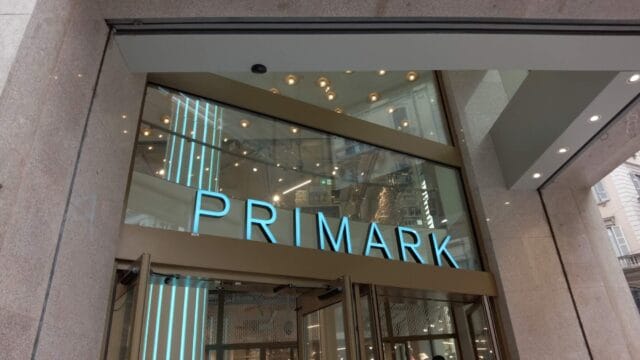
The Weston family, based in the UK and Ireland, own the parent company of Primark, one of the biggest low-cost retailers in Europe. Primark’s business model is consistent: cheap clothing, high volume.
The company does not use online sales to create profit (like Shein), but relies on in-person high-volume sales and enticingly low prices to generate revenue. This system has generated the family around $13 billion (Primark and Associated British Foods, the parent company).
However, Primark’s history is inseparable from the tragedy of the Rana Plaza disaster in Bangladesh in 2013, where more than 1,100 garment workers were killed when a factory producing Primark clothes collapsed. Even though the company joined compensation efforts, this disaster highlights the deadly consequences of using unregulated labour practices to pursue profit.
Primark has since introduced initiatives like its ‘Sustainability and Ethics Programme’, but concerns about its transparency and labour conditions can still be raised. The brand’s ultra-low pricing makes meaningful reform difficult; if a T-shirt costs £3, then someone in the chain of production is inevitably being exploited.
The Bigger Picture: Fast Fashion Wealth Distribution and Inequality
The rise of fast fashion billionaires is not just a story about individual wealth. It reflects a larger system in which profits are concentrated at the top while workers and the environment absorb the cost.
Can Fast Fashion Billionaires Ever Be Ethical?
Short answer, probably not. The fortunes of these fast fashion moguls are grounded in practices that actively exploit vulnerable workers and promote consumption that is devastating the environment. Furthermore, the ability to hold onto such immense wealth while allowing people and the planet to continue in these conditions is certainly morally questionable.
Even brands that claim to be reforming still rely on underpaid global labour and overproduction to sustain their profits. In order for these fast fashion billionaires to be classed as ‘ethical’, extremely radical change would have to occur.
The growth of the fast fashion industry illuminates the divide between the producers of wealth and those who bear its burden. While discussing how we can decrease the rapid growth of fast fashion, attention often falls on consumer behaviour. As a result of this, many shoppers feel motivated to adopt a more minimalist attitude towards consumption. However, in order to disrupt these unethical cycles, the industry itself must change and become more tightly regulated, transparent, and fair. While we pick fights with consumer behaviour, the practices of fast-fashion’s ultra-rich billionaires fly under the radar.
What Can You Do About Fast Fashion and Its Billionaires?
On an individual level, resisting the systems that reinforce the growth of fast fashion can feel like an impossible battle. But the goal is not perfection; the goal is reducing the demand for a system that fuels the climate and human crisis.
A study by the Clean Clothes Campaign found that garment workers receive only 0.5% to 3% of the cost at which a product is sold in a store. For example, from a $10 t-shirt, a worker would earn only ¢0.05-¢0.3.
In many cases, the percentage would only need to be increased to around 6% to account for a fair wage. However, fast fashion moguls refuse even this small increase, intent on maximising their own share of profit by denying their workforce any more than the bare minimum.
By avoiding these billionaire fast-fashion brands, we say no to supporting these practices.
Sustainable Alternatives to Fast Fashion: What to Do Instead

One way to do this is by shifting towards minimalism: buying fewer items that will stand the test of time. Spending the same budget on well-made items with transparent supply chains and labour can reduce the environmental and social cost of the clothes that we wear.
In a world in which fashion seems to have become temporary, something as simple as sewing a button can become a radical act. Patching, letting out, and fixing an item can give it a new life: why buy something new when you can improve on something old and add longevity to garments that you love the most?
Supporting more transparent brands is the key to getting what you need while still avoiding fast fashion’s traps. Local businesses and designers often produce designs in smaller quantities and are fully informed on all steps of their labour process. Buying from these indie brands helps shift demand and profit away from fast fashion giants like Shein and Primark.
Second-hand shopping is growing into a more viable option: thrift stores, vintage boutiques, and online marketplaces, extending the lives of garments that already exist before going out to get new ones. Check out our guide for how to find deals on second hand clothing.
No single one of these options is the answer to the climate crisis, and it will take more than this to change the systems put in place by fast fashion billionaires, but by reducing our demand for—and reliance on—disposable clothing, fast fashion loses its power over us, and the economic engine fueling fast fashion’s billionaires weakens.
To learn more about eco-friendly ways to shop, check out these resources:
- Video: The Easiest Way to Start Sustainable Fashion (it’s not what you think)
- Article: Essential Items to Build a Capsule Wardrobe

Faith studied English at the University of Oxford. When she’s not writing she enjoys thrifting, reading, and crochet.