
What does it really mean to make fashion sustainable?
Can we go beyond recycling?
Can an old piece of clothing hold not just memory, but possibility?
And how can clothing carry not just material value, but cultural and emotional meaning too?
This article explores these questions through the work of independent designer Zhang Na. Starting as an art project, she reimagines old garments, not as waste, but as carriers of time, care, and identity.
Then she went further, leading her team into material innovation, creating fabrics from waste, like ghost fishing nets and corn husks. After that, she returns to the land, working with artisans and traditions that remind us: sustainability is also about the culture, and the spirit within things.
In three movements—to reuse, to recreate, to reconnect—her work opens a way to explore how fashion can carry memory, innovation and spirit.
From the Past to the Future: How Zhang Na Sustainable Fashion Transforms Memories
Fashion isn’t just what we wear; it’s how we choose to engage with the past and shape the future. Clothing isn’t just something we wear, it holds personal stories, identities, and memories.
Some clothes stay with us, not because they’re new or trendy, but because they’ve been with us. A sweater gifted by a loved one. A coat worn during a life-changing trip. These pieces carry weight. They remind us of who we were, and maybe still are.
Others, in contrast, are easily forgotten. Bought on impulse, worn once or twice, left at the back of the closet. We’ve all been there.
What if we gave more attention to the first kind of clothing: the kind we keep, care for, and remember?
What if fashion wasn’t driven by speed or novelty, but by memory and intention?
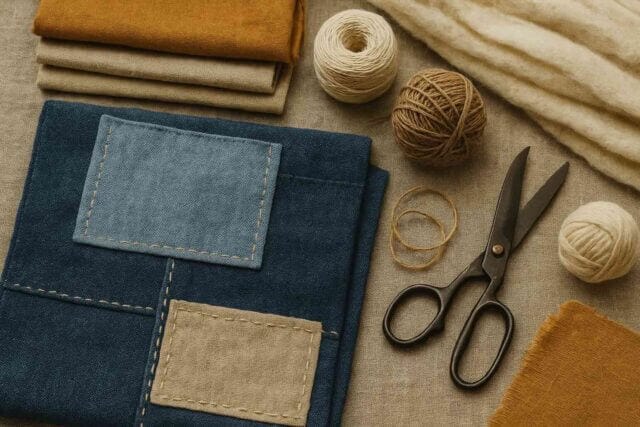
That’s the space where Zhang Na’s work begins, not with trends, but with stories. She collects old clothes and gives them a second life through re-design and patchwork. In this way, instead of leaving memories tucked away in drawers or trying to forget them, she offers a third way: to transform them.
It’s not just about sustainability, but also about storytelling, creativity, and connection. It allows us to reflect on the past, reshape it, and give it a new meaning. By deconstructing and reassembling garments, we connect what was with what’s to come, breathing new life into old fabrics.

How Can Tech Make Fashion More Sustainable? Inside Zhang Na Sustainability Innovations
In 2017, Zhang Na and her team launched a fabric lab. Their goal? To turn waste such as plastic bottles, ghost fishing nets, and old bags of coffee beans, into something useful.
One example: Zhang Na’s team blended recycled polyester from plastic bottles with sweater yarn to create a knitted garment made from regenerated materials. It wasn’t just technically impressive. It was soft, wearable, and beautiful. A piece that proved sustainable fashion doesn’t have to compromise on quality or comfort.
Innovating with Nature
They didn’t stop there. They began experimenting with biodiverse materials:
- Pineapple fibres, collected from juice factories, are transformed into soft, durable faux leather.
- Wood pulp fibres for a greener touch.
- And a corn-based faux fur which is 100% biodegradable. It breaks down naturally in soil within a year.
To learn more, check out our guide to sustainable materials.
No Fabric, No Fashion: The Link Between Tech and Design
As mentioned above, innovation in fashion isn’t just about clever design. It begins with materials. Material and design must grow side by side, and one cannot exist without the other.
As we look forward to new technologies and future-facing materials, are there existing ones that have been overlooked and undervalued?
Hidden in modern lives, these materials could carry both function and meaning. They don’t always need to be invented from scratch; sometimes, they just need to be seen in a different light.
The “Warmth (暖,nuan)” Project, a collaboration between Zhang’s team and a village in Qinghai, shows this beautifully. By working with traditional yak wool and the people who’ve lived with it for generations, they revived not only a fabric, but a way of life.

Cultural Sustainability: More Than Just Symbols
The “Warmth” Project supports local artisans not just economically, but culturally. Their craft is passed down through hands, not textbooks.
Using modern techniques, Zhang Na and her team help these crafts evolve, not by copying patterns or symbols, but by rethinking how they fit into today’s clothing needs.
One case is the yak wool coat, made in partnership with a village in Qinghai. They gather yak wool by hand, then turn it into fabric without harming the animals. The result: a yak wool coat, light as felt, warm as down, and woven with the weight of tradition.
Real sustainability, in the end, is a balance between material, culture, and spirit.
Conclusion: A New Way to Dress, A New Way to Live
Fashion doesn’t have to mean “more”. Sometimes, it can mean “again”.
Through the work of Zhang Na and her team, we see that clothing can carry memory, express emotion, and even heal. We see that the idea sustainability isn’t just about materials, it’s also about values, relationships, and the stories we choose to continue.
Whether through new fabrics made from waste, or forgotten culture brought into the light, Zhang and her team’s ideas open space for both creativity and tradition.
In the end, it’s not just about what we wear. It’s about how we relate to the world, past and present, human and nature, and what kind of future we choose to make with our hands.
Your Turn: Rediscover What You Already Own
Before you close this page, take a moment with your own wardrobe. Find one piece — old, worn, or quietly waiting — that holds a memory.
Ask yourself:
What story does it still carry?
And how might you help it continue?
Sustainability doesn’t always begin with brand names or new materials. Sometimes, it begins with the clothes we already own — and the care we choose to give them.
More Voices Shaping the Future of Sustainable Fashion
If you’d like to keep exploring how designers, makers, and innovators are rethinking fashion from the inside out, visit the Sustainable Fashion Stories section of our blog. You’ll find more profiles, ideas, and movements reshaping how we create, wear, and care for clothing.
If this story moved you or sparked a new way of looking at your own wardrobe, share it with a friend — or tag us on social when you do.
Every share helps amplify the movement toward a more thoughtful, regenerative fashion future.

Yutong is a sociology student exploring labor, culture, and sustainability through human-centred storytelling. She writes about people, practices, and ideas shaping the future of fashion and society.


